
Tale of two FTAs: What India flaunts, but New Zealand downplays
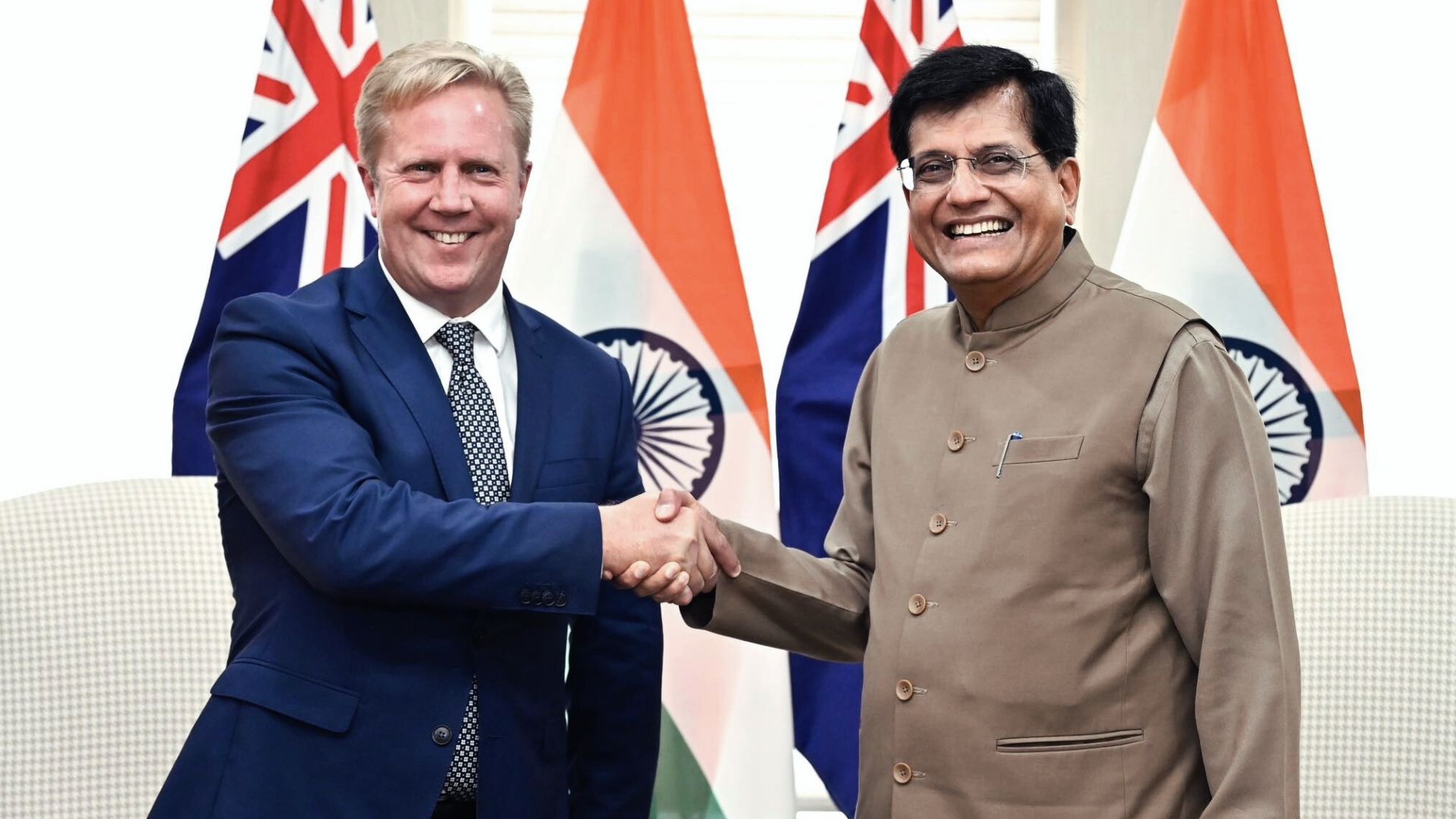
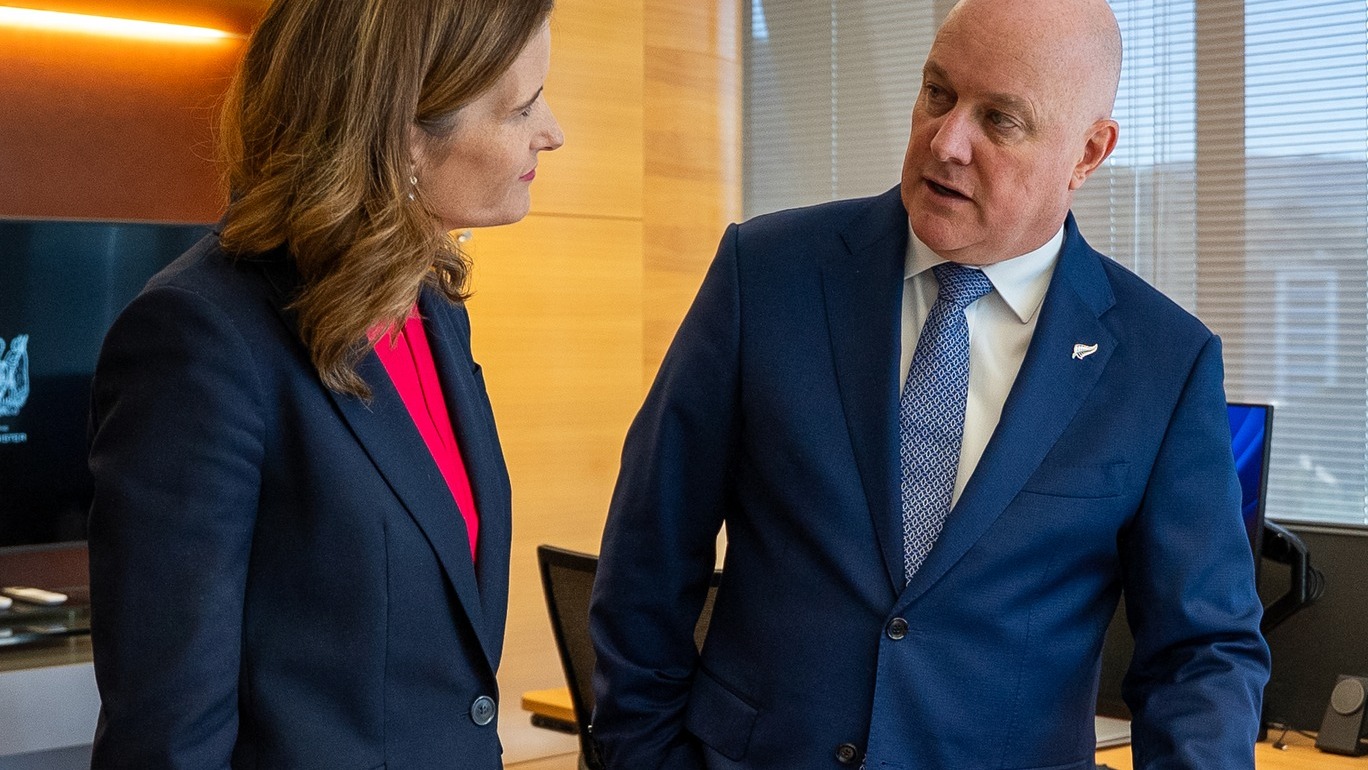
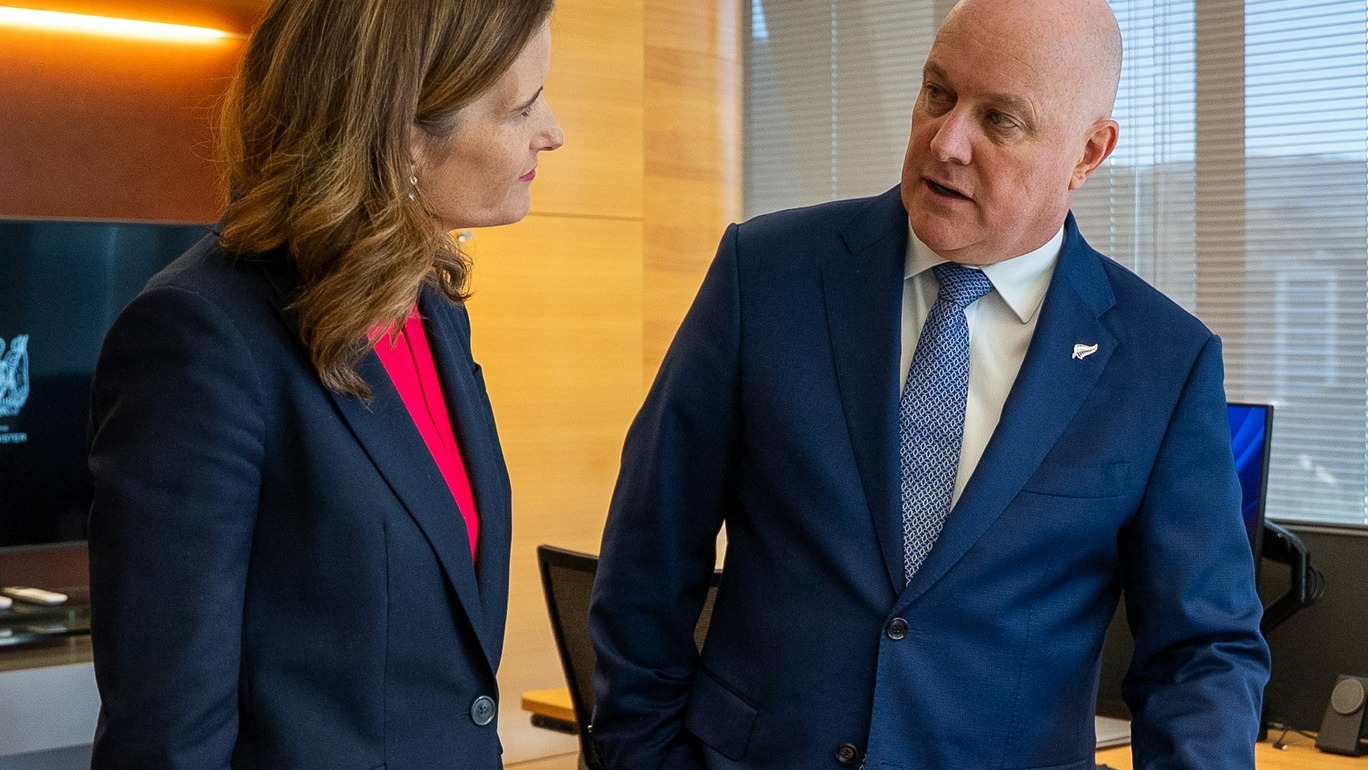
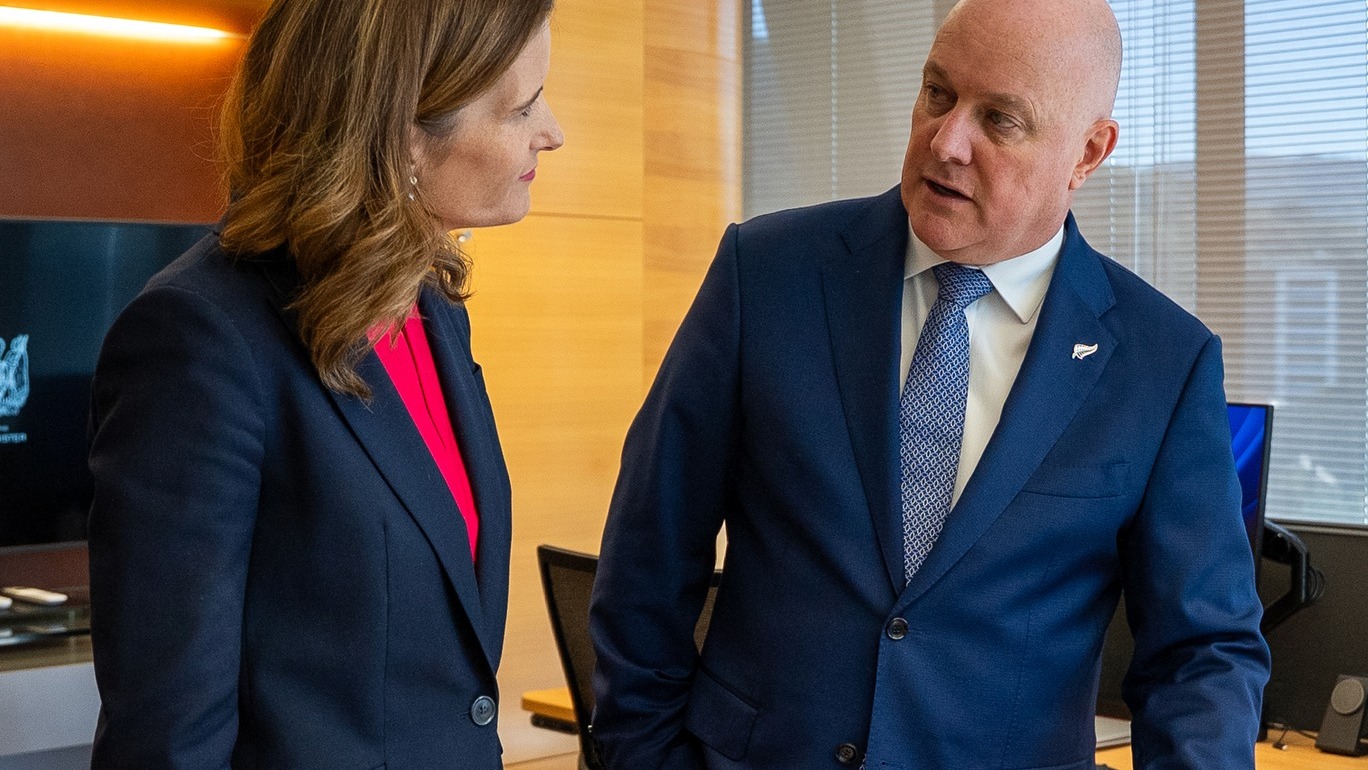
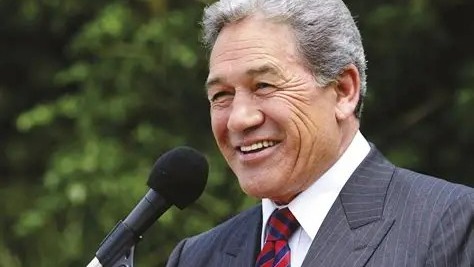
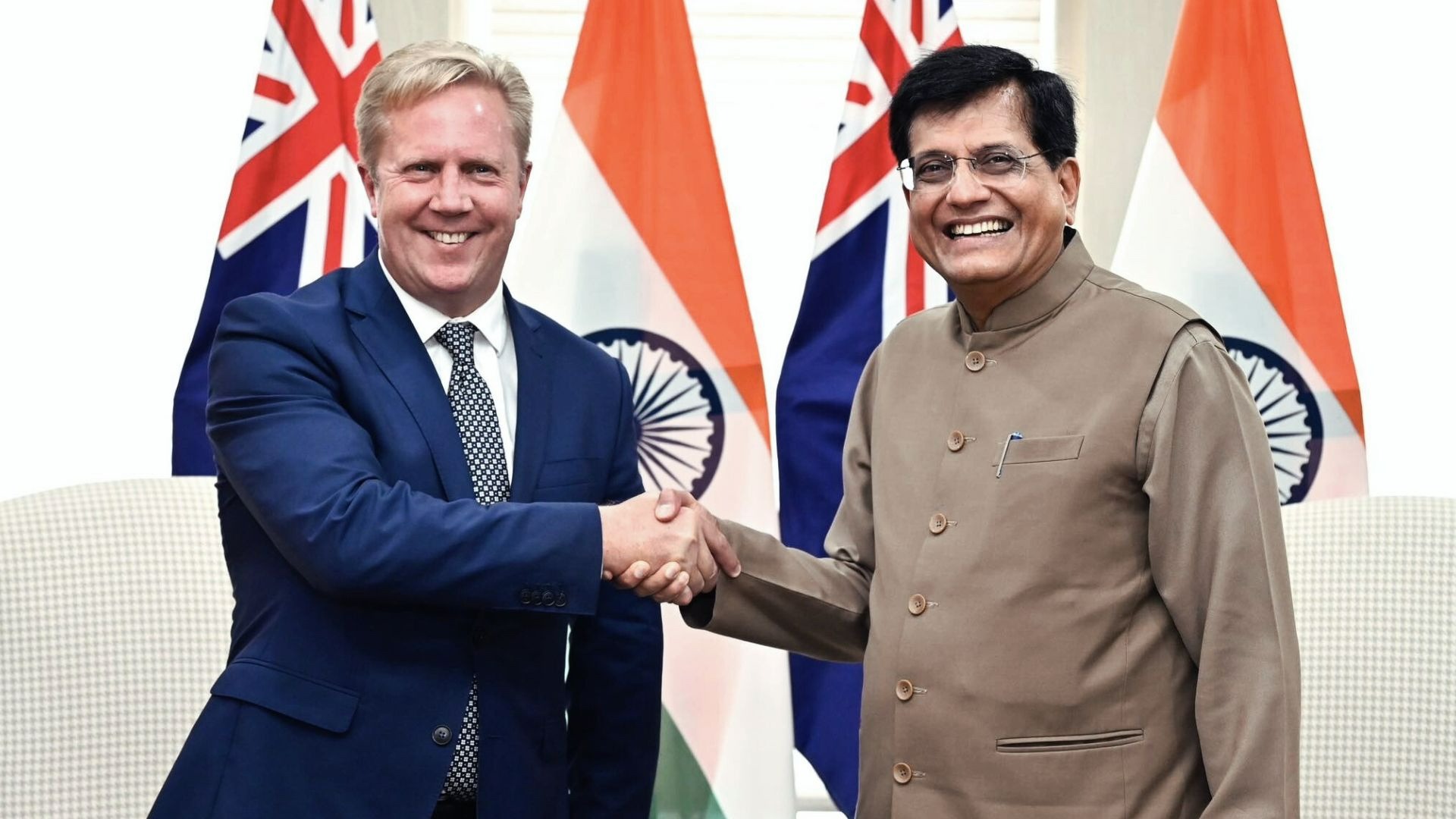
Trade minister Todd McClay with Indian counterpart Piyush Goyal in New Delhi, India, in March 2025. (Supplied photo)
Delhi has played up movement of people as a big win in the deal, but New Zealand has been coy about it.
Analysis: Free trade agreements are usually about things: tariffs shaved, quotas stretched, market access widened. People tend to arrive later, if at all, folded into footnotes about visas or skills shortages.
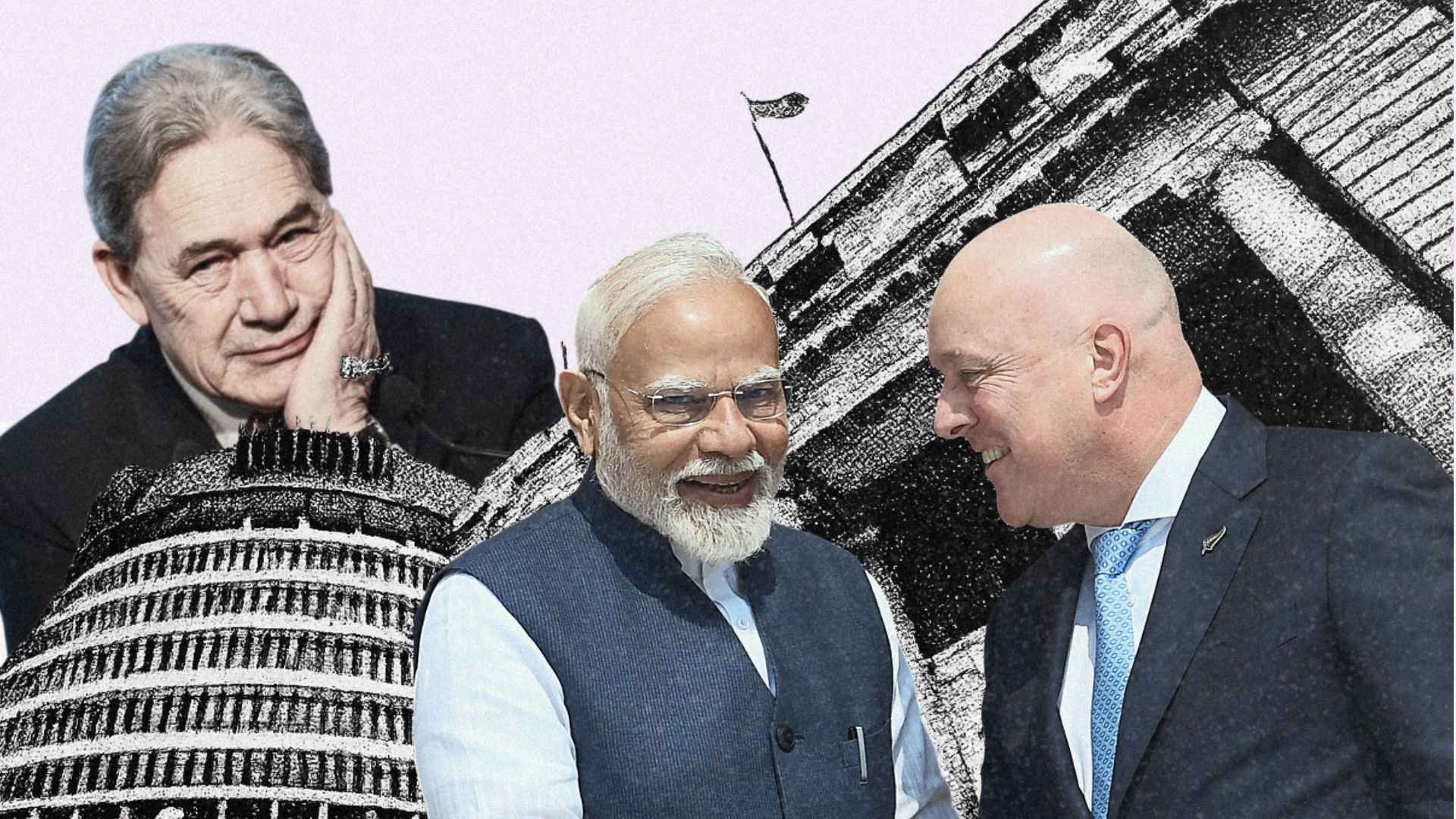
The Indita–New Zealand Free Trade Agreement announced December last year breaks that pattern – not because it moves people in unprecedented numbers, but because of how differently the two governments talk about those movements.
Read side by side, the official announcements suggest that labour mobility sits at the heart of how India and New Zealand understand the deal. Both texts describe broadly similar provisions. Temporary visas. Skilled pathways. Students and youth mobility. But the language around those provisions tells two very different stories.
India’s story: People as economic capability
teachers More than $5,000 has been raised through a community appeal launched by content creator and influencer Eliki Dakuitoga to provide emergency financial support to teachers affected by the recent salary stoppage.
Investments promising social or environmental benefits need tougher anti-greenwashing rules Investment funds increasingly promise to deliver social or environmental benefits alongside financial returns. Regulators rightly ask if these “impact investment” claims are accurate. But we also need to ask what happens when an investment’s promised impact fails to materialise,
this is a new story this is a new story
India’s announcement does not treat labour mobility as an add-on. It introduces the agreement as one that “promotes employment, facilitates skill mobility, drives trade and investment-led growth.” It places movement of people alongside trade.
That positioning hardens later when Commerce Secretary Rajesh Agrawal calls the agreement “a new generation trade agreement built on tariffs, agricultural productivity, Investment and Talent with complementarity at the core.” Talent is not peripheral here; it is one of the building blocks.
The official release goes further, describing a “future-ready and facilitative mobility framework” that “positions India as a key supplier of skilled and semi-skilled talent.” The subject of the sentence matters. This is not New Zealand granting access. It is India supplying capability.
That logic explains why the Indian text names professions. “AYUSH practitioners, yoga instructors, Indian chefs, and music teachers” sit alongside IT, engineering and healthcare. These are not random examples. They are skills that travel with culture, identity and brand: labour as something distinctive, not interchangeable.
Numbers, too, are framed in trade terms. The agreement opens a visa pathway “with a quota of 5,000 visas at any given time and a stay of up to three years.” That phrasing echoes the way services commitments are scheduled under trade rules.
Students are folded into the same economic story. India highlights “work opportunities during studies [and] post-study work pathways,” presenting education, labour and mobility as a continuum rather than separate policy silos. The cumulative effect is clear. India is not simply celebrating access for its citizens. It presents labour mobility as something it does well at scale and under rules; as well as a source of value in its own right.
New Zealand’s story: Labour as a domestic problem to solve
New Zealand’s announcement tells a different story, even as it describes many of the same mechanisms. Labour mobility appears later in the text, after tariffs, agriculture and export gains. When it does appear, it is framed through a domestic lens. The agreement establishes visas “to better provide the skills to grow the New Zealand economy”, grounding mobility firmly in internal labour needs.
That framing is reinforced repeatedly. The visas will focus on “priority jobs where New Zealand has skills shortages”, drawn from the “skills shortage Green List”. Access is conditional, targetted and explicitly temporary.
Control is emphasised at every turn. The visas are “non-renewable”, “all immigration screening and qualification requirements remain unaltered”. The government has “retained the ability to change the Green List to match skills shortages”.
Even the numbers are presented differently: “up to an average of 1,667 skilled 3-year work visas per year.” This is not a standing trade commitment, but an annual administrative allowance. Students barely feature. Youth mobility appears mainly through the Working Holiday Scheme, justified “to ensure our tourism and rural sectors have the workers they need”. Unlike India’s pipeline narrative, mobility here is about filling gaps, not building futures.
None of this means the agreement says different things in law. It doesn’t. The provisions are shared, negotiated and mutually agreed. But the explanations reveal different assumptions about labour itself.
India consistently talks about labour mobility the way it talks about services or exports: as capability, opportunity and strategy. New Zealand consistently talks about labour mobility the way it talks about immigration: as scarcity, control and risk management.
Trade agreements are often read through what they change. Sometimes they are better understood through what they reveal. In this case, the movement of people tells a quieter story than the movement of goods. India is presenting itself as a country whose people are part of its global economic offer. New Zealand is presenting itself as a country that will accept people when it needs them, and only on its own terms.
That difference is not about power. It is about self-image. And in a deal that is meant to shape the relationship for decades, it may be one of the most important things the two countries are saying to each other, but without ever quite saying it out loud.