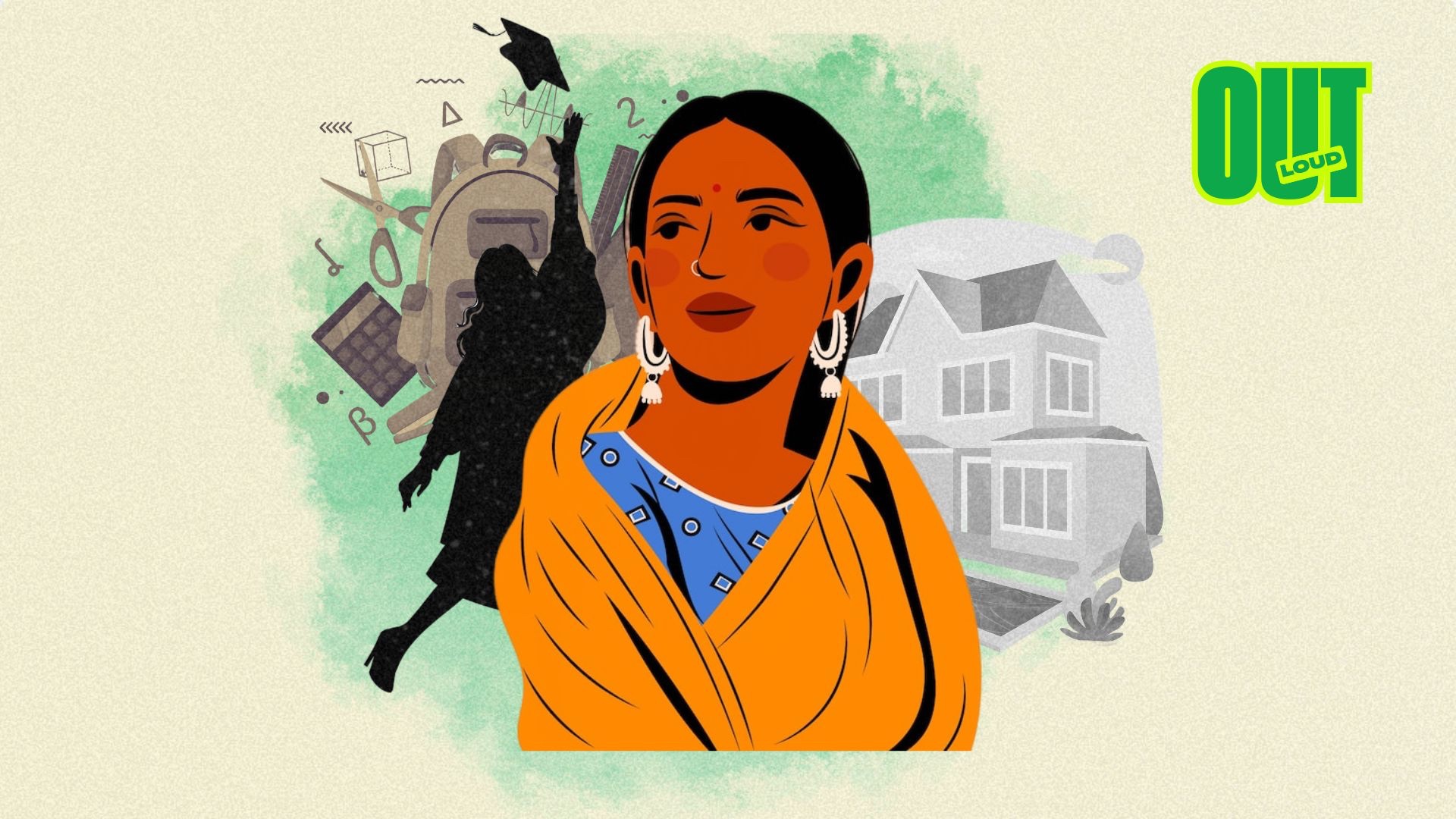

Out Loud: The secret resilience that drives the Indian migrant

Indian migration has rarely been casual.
To outsiders, the outcome looks like advantage. What is rarely seen is the cost.
There is a growing habit in modern discourse to label visible success as “privilege.” If a group appears to be doing well — in education, business, or professional life — the assumption is often that the path was smooth, supported, and somehow easier than for others.
I didn’t speak to a dear friend for more than ten years after he levelled that very charge at me. His accusation — or rather, his assumption — was that I had been spoon-fed by my Indian parents. What he refused to acknowledge was the success built on their initial struggle and work within New Zealand society. That effort created what some might describe as a comfortable or stable family network.
Perhaps he would have preferred a different story — one where I abandoned my parents once I got on my feet, rather than continuing to grow a family business alongside them.
He may have been joking at the time, but his words lodged deep in my psyche. It took more than a decade for that wound to heal. That kind of ignorance is, unfortunately, far too common.
teachers More than $5,000 has been raised through a community appeal launched by content creator and influencer Eliki Dakuitoga to provide emergency financial support to teachers affected by the recent salary stoppage.
Investments promising social or environmental benefits need tougher anti-greenwashing rules Investment funds increasingly promise to deliver social or environmental benefits alongside financial returns. Regulators rightly ask if these “impact investment” claims are accurate. But we also need to ask what happens when an investment’s promised impact fails to materialise,
this is a new story this is a new story
For many Indian migrants, this framing is not just inaccurate — it is almost unrecognisable to us.
What looks like privilege from the outside is far more often the product of pressure. Not the kind imposed by systems or institutions, but the kind that comes from family, history, and obligation. Pressure that begins early, never truly switches off, and quietly shapes every major decision.
Indian migration has rarely been casual. For many families, moving countries was a high-stakes gamble involving debt, sacrifice, and the abandonment of familiarity. Parents did not uproot their lives so their children could “find themselves.” They moved so the next generation could secure stability, dignity, and upward mobility — and that expectation is never left unstated.
Success, in this context, is not optional. It is the repayment plan.
From a young age, children absorb this reality. Education is not encouraged — it is assumed. Careers are not chosen for passion alone, but for reliability, status, and security. Failure is not romanticised as learning; it is feared as a waste of an opportunity others in the family never had.
This pressure does not always announce itself loudly. It shows up in subtle, relentless ways: comparisons with cousins, reminders of sacrifice, quiet disappointment rather than open anger. It is rarely abusive, but it is constant. And it produces results — disciplined study habits, long work hours, risk aversion, and a deep intolerance for complacency.
To outsiders, the outcome looks like advantage: high academic achievement, stable professions, home ownership, financial security, successful entrepreneurship. What is rarely seen is the cost.
Anxiety masked as ambition. Burnout normalised as responsibility. The weight of knowing that if you fall, you don’t just fall for yourself — you fall for your parents, your grandparents, and the story they told themselves about why leaving home was worth it.
This is not a plea for sympathy, nor an attempt to claim moral superiority. Every community carries its own burdens and blind spots. But flattening complex outcomes into the language of “privilege” erases the human effort behind them — and replaces understanding with resentment.
Indian migrants did not arrive carrying advantage. They arrived carrying expectation.
If there is something worth acknowledging, it is not privilege, but pressure — and the resilience required to live with it quietly, year after year.