
New Thai Dairy Opportunities For Australian, NZ Exporters | CZ app

This is for testing
New Zealand stands to benefit the most. Critically
Insight Focus
In 2025, Thailand grants dairy import tax exemptions from New Zealand and Australia. The policy aims to reduce costs and boost trade, but importers must follow detailed procedures to qualify. It may increase competition and pressure Thai dairy producers to adapt.
Thailand’s Dairy Tariff Removal Reshapes Regional Trade Dynamics
Thailand’s decision to eliminate import duties on dairy products from New Zealand and Australia from January 1, 2025, is already reshaping trade flows and competitive dynamics across Southeast Asia. The move sharply improves the landed cost competitiveness of imported dairy, creating immediate upside for exporters while intensifying structural pressure on Thailand’s domestic dairy industry.
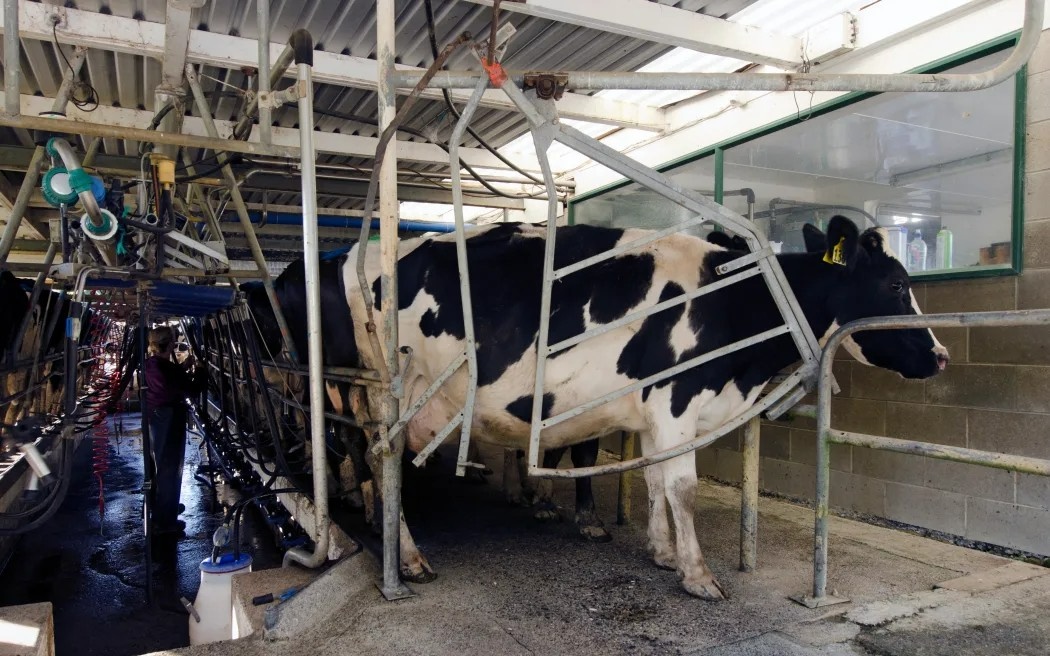
At its core, the removal of tariffs lowers input costs for Thai food and beverage manufacturers, many of whom rely heavily on milk powders and dairy ingredients. Imported products—particularly skim milk powder (SMP) and whole milk powder (WMP)—are significantly cheaper than domestic raw milk, which averages THB 21–23/kg, roughly double the equivalent imported cost. This differential incentivises substitution toward imports, particularly in industrial applications such as recombined milk, confectionery, and beverages.
For New Zealand and Australian exporters, the implications are stronger price competitiveness, improved access, and the potential for sustained volume growth in a market already heavily reliant on imports. In 2024, the two countries supplied around 110,000 tonnes of dairy products to Thailand, accounting for approximately 80% of total imports. With tariffs now removed, import penetration is expected to deepen further.
teachers More than $5,000 has been raised through a community appeal launched by content creator and influencer Eliki Dakuitoga to provide emergency financial support to teachers affected by the recent salary stoppage.
Investments promising social or environmental benefits need tougher anti-greenwashing rules Investment funds increasingly promise to deliver social or environmental benefits alongside financial returns. Regulators rightly ask if these “impact investment” claims are accurate. But we also need to ask what happens when an investment’s promised impact fails to materialise,
this is a new story this is a new story
Early Market Impact Since Implementation
Although the policy has only been in force since early 2025, initial trade data points to a continuation (and likely acceleration) of import growth trends. Early-year (January–March) data suggests rising volumes of whole milk powder imports, particularly from New Zealand, indicating that processors are already responding to improved import economics.
*Jan-Mar
While the data remains partial, the direction of travel is clear. The tariff removal is reinforcing Thailand’s dependence on imported dairy inputs and strengthening Oceania’s role as the dominant supplier base.
Export Opportunities for New Zealand and Australia
The policy creates opportunities for the two exporting countries, largely driven by how the tariff exemptions are structured.
New Zealand stands to benefit the most. Critically, there are no volume restrictions on its exports under the FTA framework. Once the required approvals are obtained, shipments can enter Thailand duty-free without quota constraints. This provides exporters with flexibility to scale volumes rapidly, respond to demand shifts, and capture incremental market share. The absence of quantitative limits is particularly advantageous in a market where demand for imported dairy ingredients is structurally strong.
Australia also benefits from tariff elimination, but within a quota-based system. Imports within the allocated quota qualify for 0% duty, while volumes outside the quota face tariffs as high as 194.4%. As a result, Australian exporters must focus on optimising quota utilisation and targeting higher-value or specialised segments where margins justify tighter supply limits.
IPR-Like Benefits Provide Boost
Reframed through an inward processing relief (IPR) lens, Thailand’s duty refund mechanism reinforces the country’s role as a regional dairy processing and re-export hub while creating a clear, rules-based pathway for exporters to optimise costs.
Under this system, import duties paid on dairy inputs can be reclaimed where those materials are subsequently used in production, mixing, assembling, packing or further processing and then re-exported within one year of import.
To qualify, firms must follow standard import procedures at entry and submit a formal refund application within six months of export, supported by the required documentation.
This effectively functions as an IPR-style regime, lowering the effective cost of imported ingredients used in export-oriented production and improving the competitiveness of Thailand-based processing operations. It also creates a practical route for processors whose imports still incur duties.
Implementation Framework and Compliance Requirements
Despite the headline tariff removal, access to 0% duty is conditional on strict administrative compliance. Importers must follow a two-stage approval process.
First, documentation is submitted to the Department of Livestock Development (DLD), which assesses eligibility based on product and origin criteria. Upon initial approval, importers must secure final certification from the Department of Foreign Trade or the Milk Board. This requires submission of key trade documents, including invoices, bills of lading and certificates of origin.
Certificates are valid for 30 days and must be reported within 30 days of importation to maintain eligibility for future shipments. Failure to comply results in a reversion to punitive tariffs—up to 216% in the case of New Zealand shipments.
The administrative burden is therefore non-trivial. This may limit participation to more sophisticated market players, at least in the short term.
Interaction with Existing Quotas and Domestic Policy
Thailand’s dairy liberalisation remains partially constrained by legacy quota systems, particularly for skim milk powder. Under WTO-linked arrangements, SMP imports are still governed by quota allocations, with in-quota tariffs of around 5% and out-of-quota tariffs exceeding 200%.
While WTO quota volumes remain lower, Thailand’s total permitted SMP imports for 2026—combining WTO and FTA allocations—reach approximately 90,862.5 tonnes. However, access is conditional on factors such as import history, production capacity and utilisation rates. This ensures that import growth remains managed rather than fully liberalised.
Additionally, Thailand has embedded domestic support mechanisms within the import framework. For example, importers of certain products are required to purchase locally produced raw milk to help absorb excess domestic supply, estimated at 211–219 tonnes per day in 2026. This reflects a balancing act: promoting trade liberalisation while safeguarding local farmers.
Structural Implications for the Thai Dairy Market
The long-term implications of the policy are likely to be significant. Increased access to lower-cost imports will intensify competition within Thailand’s dairy sector, placing pressure on domestic producers whose cost structures are structurally higher.
Over time, this may lead to margin compression for local producers and industry consolidation as smaller or less efficient farms exit the market. However, we are also likely to see productivity improvements and innovation as the sector adapts to remain competitive.
At the same time, the policy enhances Thailand’s attractiveness as a regional processing base, strengthening its position within Asian dairy supply chains. As for Australia and New Zealand, early indicators suggest that the policy is already driving stronger import demand and reinforcing Oceania’s dominance in the Thai market.
Dairy Monthly